Tataurangi Golf
HomeCoursesServicesAboutNewsContact
News
Press, milestones and openings.
August 2026
Muriwai signs off on masterplan continuation
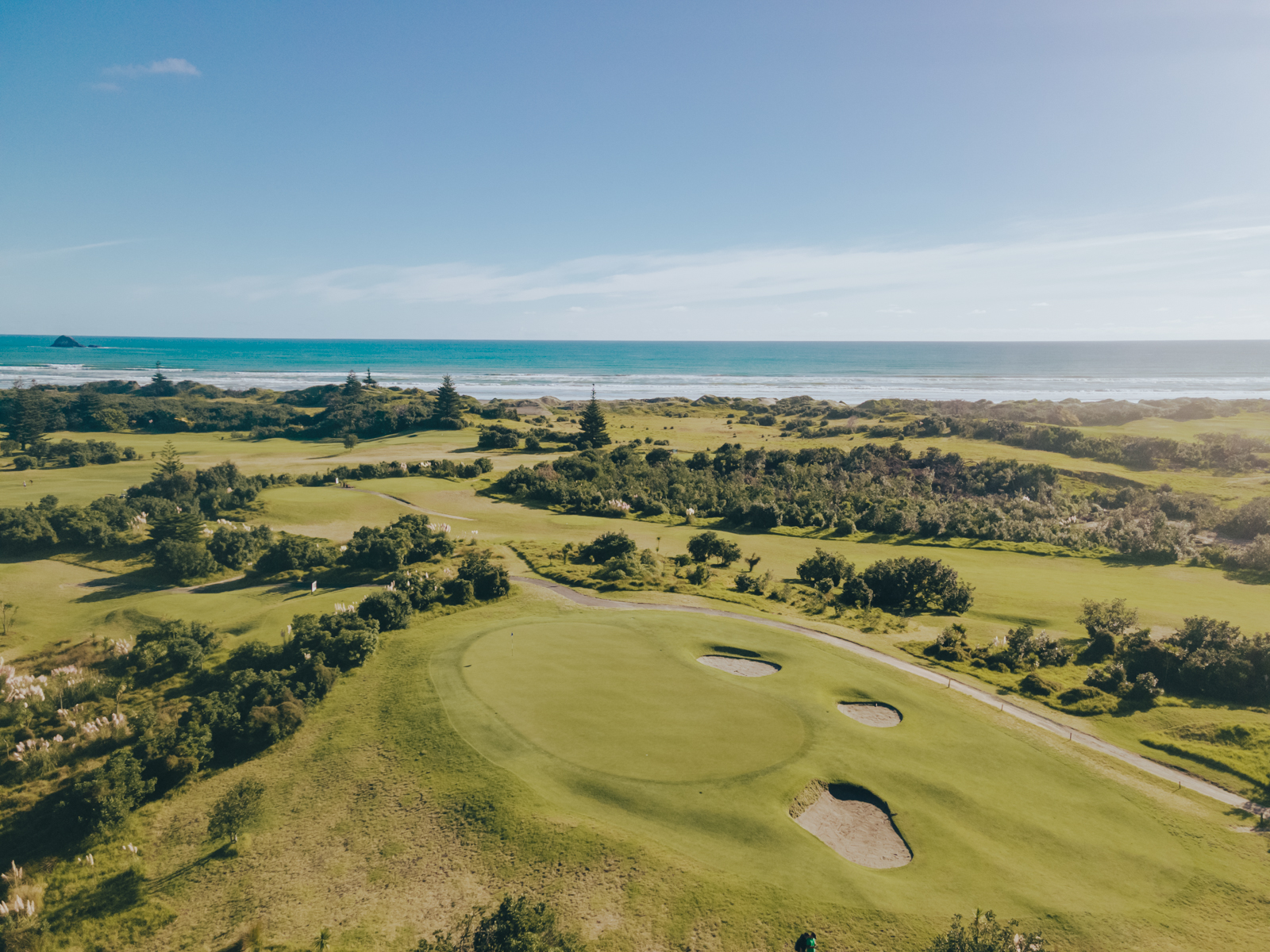
Muriwai Golf Club held a Special General Meeting this month, voting to approve the continuation of its course masterplan with Tataurangi Golf — a four-year programme of work that will also bring several of the club's original holes back into the current routing. Sharing the news, Muriwai greenkeeper Harry Middleton said: "Very excited to say we held a successful Special General Meeting at Muriwai yesterday to propose the continuation of the course masterplan, including bringing some of Muriwai's old holes back into the current routing! Over the next four years, we'll be working towards completing this masterplan and continuing to evolve what is already a very special golf course." Three new holes are planned as part of the programme, alongside a remodel of the existing 14th. Combined with the return of several of Muriwai's original holes to the routing, the work represents one of the most significant changes to the course's layout in its history — a considered evolution rather than a wholesale rebuild. "I'm extremely lucky to work for a club that is so progressive and always looking for ways to improve and push the boundaries," Middleton said. "And getting to do it all alongside Phil T... does it get any better?!" For Tataurangi Golf, the continuation builds on the concept masterplan already drawn up for Muriwai Links and the renovation work currently under way at the course. As with every stage of the project, the new holes and remodelled 14th are being developed from the ground up — walking the land, understanding its dunes and drainage, and letting the routing follow what the site offers rather than imposing a plan on it. Four years of work now lie ahead, with Muriwai's evolution continuing to take shape hole by hole.
July 2026
Manawatu signs on for stage one and two of its masterplan
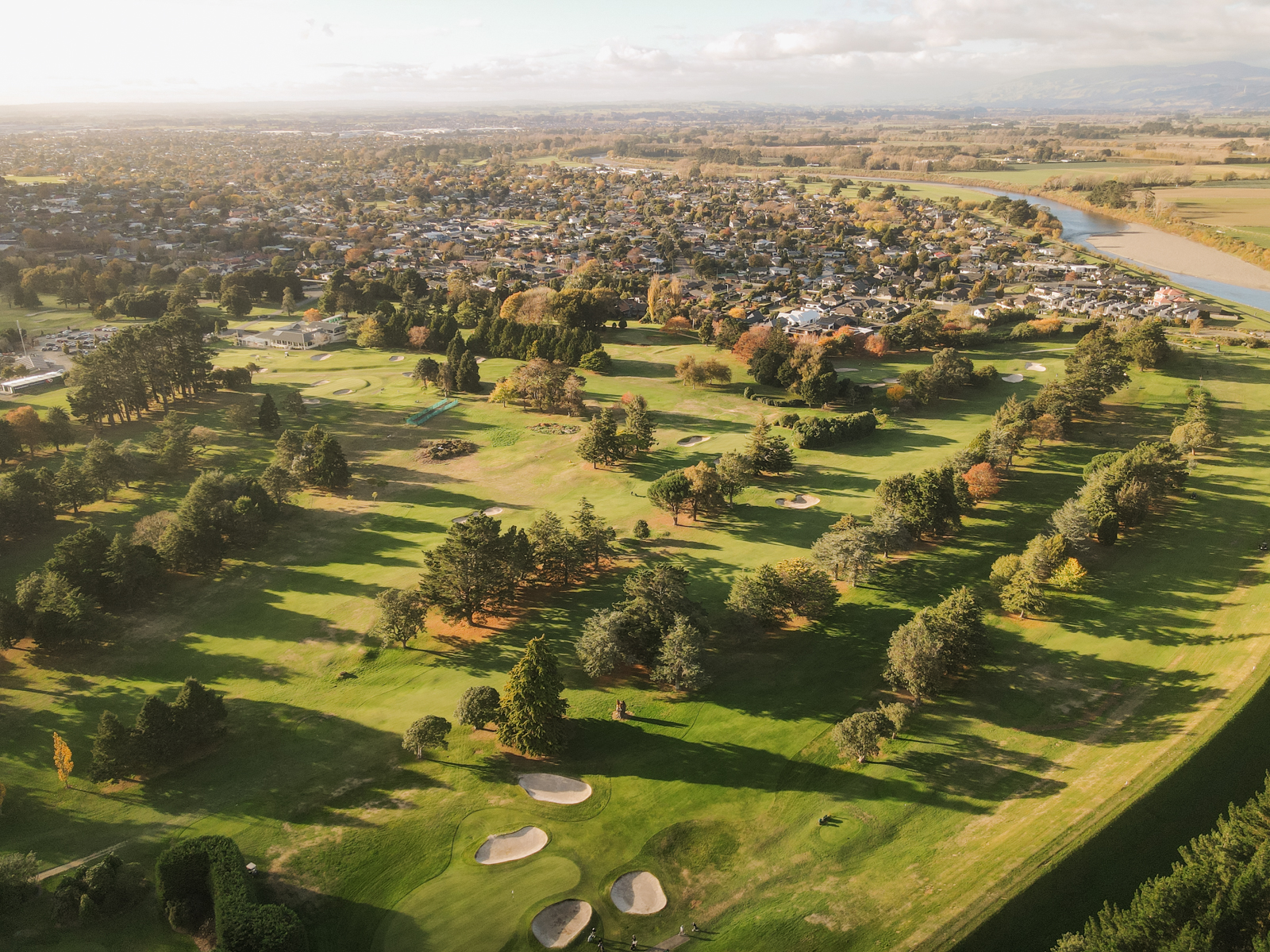
The Manawatu Golf Club in Palmerston North has signed on with Tataurangi Golf for the first two stages of a new masterplan covering the club's grounds — confirmation of a design relationship that began in December 2024. Tataurangi Golf's involvement with Manawatu started with an initial engagement in December 2024, when early conversations opened around the long-term direction of the course. Since then, the team has spent time on site getting to know the land, its drainage patterns and how members currently play the course, laying the groundwork for the wider vision now taking shape as a full masterplan. Rather than approaching the new work hole by hole, Tataurangi Golf was engaged to draw up a complete masterplan for the club — a long-term vision that sequences improvements across the whole property so that each stage builds logically on the last, rather than a series of disconnected projects. The plan considers playability and strategic interest for members of all abilities, agronomic performance and drainage across the course, and the kind of practical, buildable staging that lets a club keep operating and generating revenue while work is under way. Stages one and two, now signed off, mark the first phase of that vision moving from plan to construction. As with every Tataurangi Golf project, the early planning work focuses on understanding the existing land, drainage patterns and turf performance in detail before any shaping begins, so that the changes made are the right ones for Manawatu's specific site and climate rather than a generic solution applied to a New Zealand course. For Manawatu Golf Club, the masterplan represents a considered, long-term investment in the course rather than a one-off facelift — the same approach Tataurangi Golf has brought to new builds like Windross Farm and Tieke Golf Estate and major upgrades like Mount Maunganui's Dunes development. As planning progresses, further stages beyond the first two are expected to follow, building on a partnership that, though still young, is already shaping the club's future.
April 2025
Mount opens the second-biggest practice green in the country
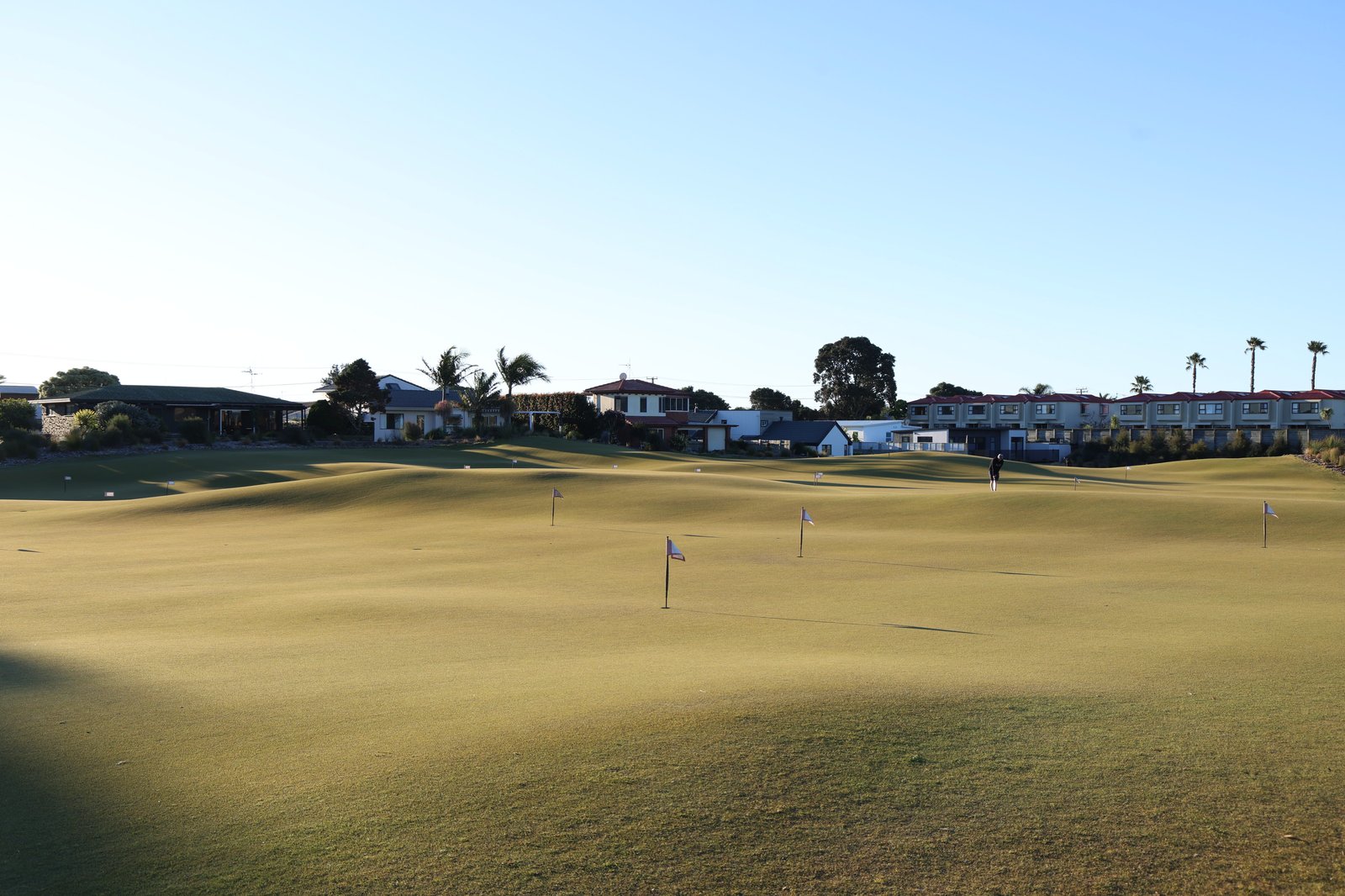
Mount Maunganui Golf Club unveiled a new practice green in April 2025, built by Tataurangi Golf as the centrepiece of the club's $3 million Dunes development. At 6,000 square metres, it ranks as the second-biggest practice green in the country and among the largest of its kind anywhere in the world — a serious statement of intent from a club investing in its future. Building a green at that scale is a different engineering challenge to a standard course green. Tataurangi Golf worked through an extensive shaping and drainage design to give the surface the contour variety needed for genuine practice value — run-offs, tiers, subtle borrows and a range of hole locations that let members rehearse everything from a 40-metre pitch to a testing 15-metre breaking putt, all on the one green. Beneath the surface, a comprehensive drainage network and irrigation system were built to keep a green of this size playing consistently in Mount Maunganui's coastal climate, through both summer growth and winter wet. The practice green was delivered as the second stage of the wider Dunes development, following on from new driving range facilities completed in the project's first stage. Together, the two stages give Mount members and visitors 15 outdoor hitting bays and two ball-tracking simulator bays alongside the new green — a complete practice facility that covers full-swing work, simulator-based technical analysis and short-game practice in one precinct. Delivering a project of this scale on a live, operating golf club brought its own logistical demands. Staging the works to keep disruption to members' golf to a minimum, sequencing the driving range and green construction, and coordinating shaping, drainage, irrigation and grassing crews across both stages required careful project management from Tataurangi Golf from the earliest planning through to handover. The finished facility gives Mount Maunganui Golf Club one of the most complete practice set-ups in New Zealand golf, built to support everyone from junior members working on their short game to serious competitors preparing for tournament golf. It's a project that reflects Tataurangi Golf's growing focus not just on new course design, but on the practice and training infrastructure that keeps a club's membership improving and engaged.
January 2022
Tieke Golf Estate opens to the public
Tieke Golf Estate opened its doors to the public in January 2022, and it didn't take long for the course to be recognised as one of New Zealand's most sought-after golf experiences. Built by Tataurangi Golf, in collaboration with Brett Thompson, on rolling land at Tamahere in the Waikato, Tieke has since been named one of Golf New Zealand's Marquee courses — a mark reserved for layouts that stand among the country's best. The Waikato site presented its own set of design questions. The region's fertile, gently rolling farmland and naturally high water table called for a routing that worked with the land's drainage patterns rather than fighting them, and for turf selections suited to Waikato's warm, humid summers and cooler, wetter winters. Tataurangi Golf, working with Brett Thompson, shaped the course to make the most of the property's natural contours and outlooks, favouring wide, strategic fairway corridors and green complexes that give golfers of every level a way to play the hole, rather than a single 'correct' line off the tee. Drainage and water management sat at the centre of the build. Careful shaping and a considered irrigation and surface-water strategy mean Tieke plays firm and true for more of the year than the region's climate might suggest, while ponds and waterways worked into the routing double as both a strategic feature for golfers and a functional part of the course's water management. The course was designed from the outset to support more than just golf. Alongside the fairways, Tieke Café & Bar opened as a seven-day destination in its own right, serving brunch, lunch and afternoon menus to members, visiting golfers and locals who simply want to enjoy the outlook. That combination — a genuinely testing golf course paired with a hospitality offering people want to return to even on non-golf days — has been central to Tieke's rapid rise. Being named a Golf New Zealand Marquee course within a few years of opening is a rare achievement for a new build, and it reflects the same approach Tataurangi Golf brings to every project: routing and shaping that respects the site, turf and drainage systems built for the long term, and a finished product that plays as good as it looks. Tieke Golf Estate stands today as one of the clearest examples of that work in the Waikato.
September 2016
Windross Farm's gates open
When the gates opened at Windross Farm in September 2016, golfers got their first look at what Tataurangi Golf, working in collaboration with Brett Thompson, had shaped from open Ardmore farmland — 60 hectares of rolling countryside turned into a modern, links-style golf course with uninterrupted 360-degree views in every direction. The brief was simple in ambition and demanding in execution: build a course that felt like it had always belonged on this land. Long before any shaping began, the Tataurangi Golf team, alongside Brett Thompson, spent months walking the property, tracing its natural swales, ridgelines and shelterbelts, and letting that existing landform dictate the routing rather than forcing a layout onto the site. The result is a course that moves with the contours of the farm instead of against them — firm, fast-running fairways, low-profile bunkering, and green complexes built to reward a ground game as much as a high, soft approach. Exposure to the open Ardmore sky was treated as a design feature rather than a challenge to hide from. Holes were routed to play in different directions relative to the prevailing wind, so no two holes feel the same and no round plays the same way twice. Where possible, existing farm dams and natural drainage lines were retained and worked into the course as hazards and water management features, keeping the build sympathetic to the land it came from and reducing the long-term footprint of the finished course. Getting from paddock to playable golf course took sustained work on the ground — hand-shaped greens and surrounds, a full grassing and grow-in programme suited to the local climate, and close agronomic attention to establish turf that could handle both member play and championship conditions. That attention to detail paid off quickly: within a year of opening, Windross Farm was chosen to host the LPGA's McKayson New Zealand Women's Open, putting a course still finding its feet in front of the best players in the women's game and holding up to the scrutiny. A decade on, Windross Farm remains one of the clearest early statements of Tataurangi Golf's design language — work with the land, build for genuine playability, and create a course that earns its reputation on the ground rather than on paper. The course welcomes visiting golfers on weekdays and weekends, with bookings required in advance.

Tataurangi Golf
A family-owned golf course architecture business — new designs and renovations, grounded in land, turf and the game.
Business
Work
Contact
EnquireAotearoa New Zealand
© 2026 Tataurangi Golf Family-Owned Golf Course Architecture & Renovation